
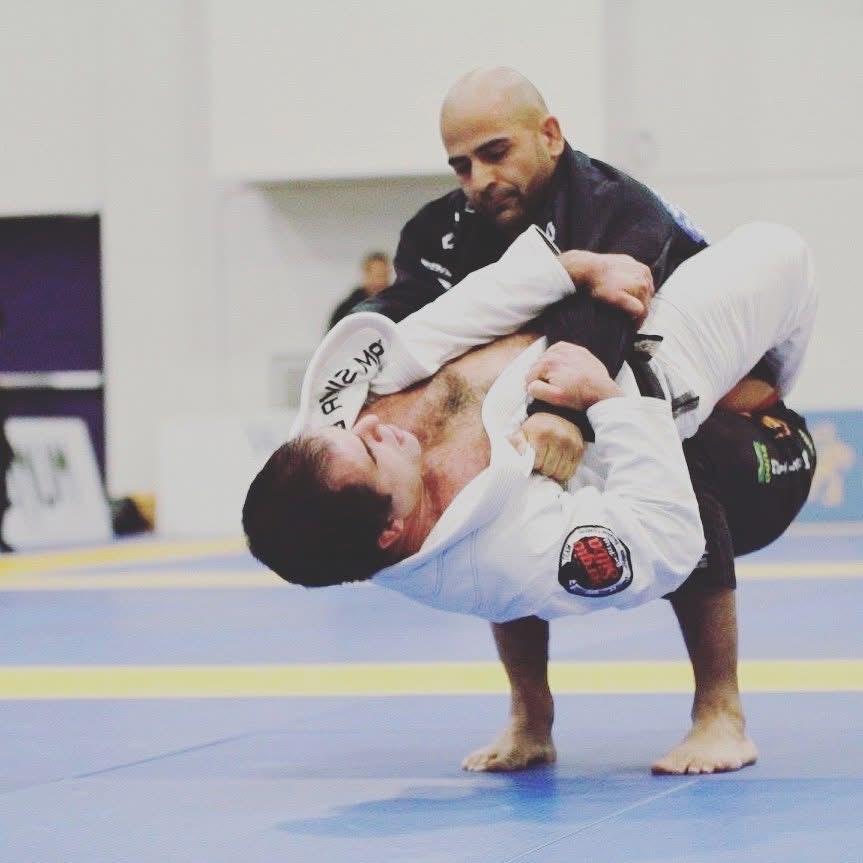
Parents often tell me their child is “shy,” “sensitive,” or “gets pushed around.” What they're really describing is a child who hasn't yet had enough chances to discover what they're capable of. Brazilian Jiu-Jitsu gives children those chances every single class.
Confidence comes from competence
You can't talk a child into feeling confident. Confidence is a by-product of competence — of doing something hard and realizing you can. In Jiu-Jitsu, a seven-year-old learns to escape from underneath a bigger partner using leverage and timing instead of strength. The first time it works, something changes in how they carry themselves.
Safe pressure, every class
Jiu-Jitsu is one of the few activities where a child experiences controlled physical pressure in a safe, supervised setting. Learning to breathe, stay calm and think while someone is on top of you is a life skill. Children who practice this regularly are noticeably calmer when a classmate shoves them or a conversation gets heated.
Stripes, belts and visible progress
Our kids program uses stripes and belts to mark progress. These aren't participation awards — a child earns each one by demonstrating technique, focus and good behavior. Visible, earned milestones teach children that effort over time produces results.
Learning to lose (and try again)
Every student gets swept, pinned and submitted in training — including the instructor. Children learn that getting caught isn't failure; it's information. They tap, reset and go again. That resilience shows up in homework, sports and friendships.
What parents notice at home
- Better posture and eye contact
- Calmer reactions to frustration
- More willingness to try new things
- Respectful language with siblings and adults
At our Alameda academy, children ages 5–12 train in a structured, positive environment with age-appropriate techniques and a strong emphasis on respect and anti-bullying. Toddlers (2.5–5) start with our motor-fitness based Little Warriors class.